I wanted a stargazing app for my Apple Watch but did not want to pay a monthly subscription. So I spent an hour with Claude making this. Lift your wrist, point the watch at the sky, and it tells you what you are aiming at, the nearest star, planet, the Sun or the Moon, and draws the horizon, the ecliptic and constellation figures around it.
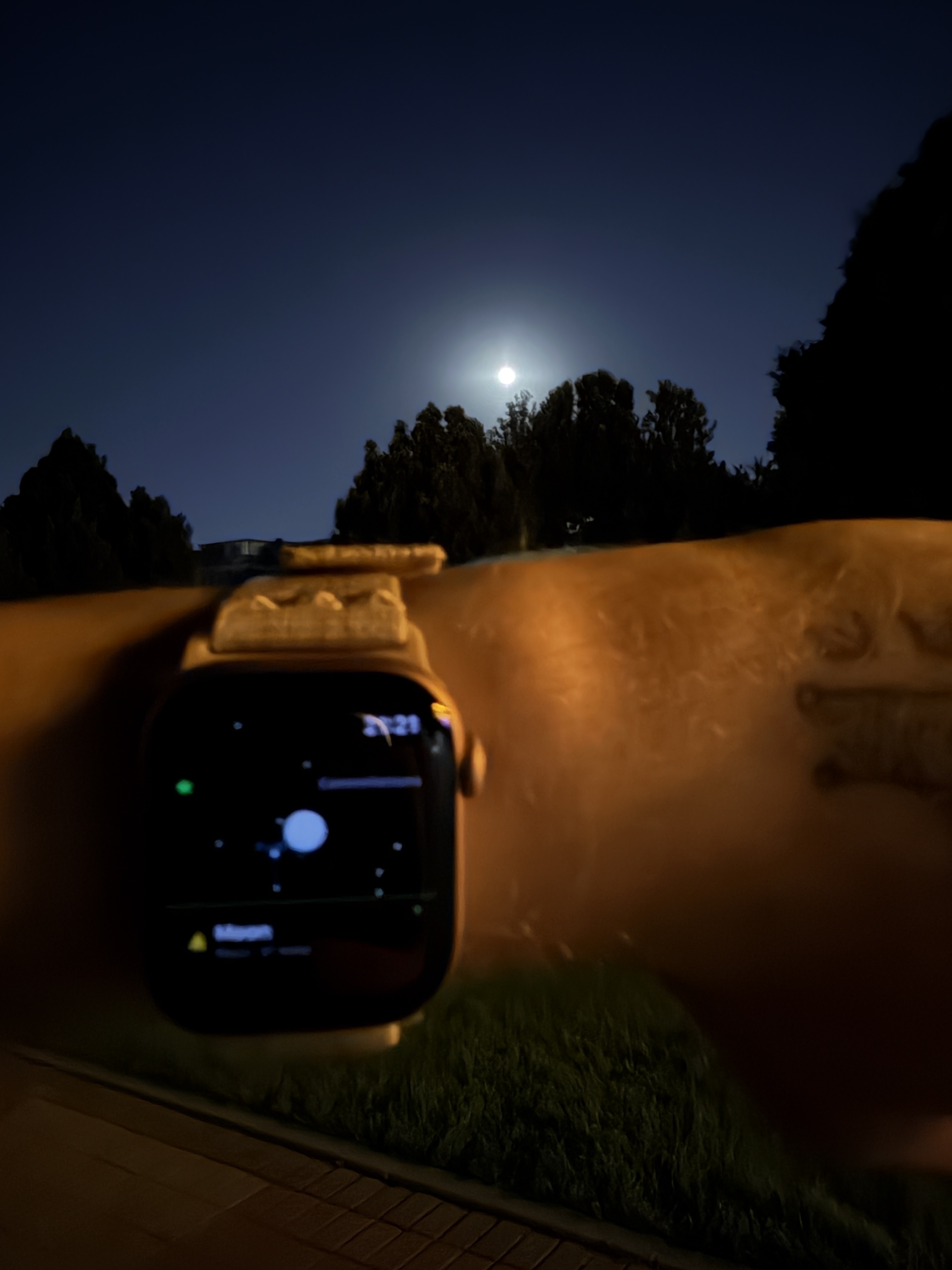
It runs standalone on the watch. No companion iPhone app, no network call, no API. A catalogue of 104 bright stars ships as JSON. The planets and the Sun come from a Keplerian ephemeris, and the Moon from Schlyter's compact lunar theory, both computed on-device. Everything else is a function of time and your location.
Turning where you point into a name is a short chain. CoreLocation gives your latitude and longitude. The time gives sidereal time, which converts a star's fixed coordinates into an altitude and azimuth for your spot right now. CoreMotion gives the watch's orientation. Then every star, planet, the Sun and the Moon is placed in altitude and azimuth, and the app picks the nearest, weighted slightly by brightness so a bright planet a few degrees off beats a dim star that is closer. That matches what you would actually notice.
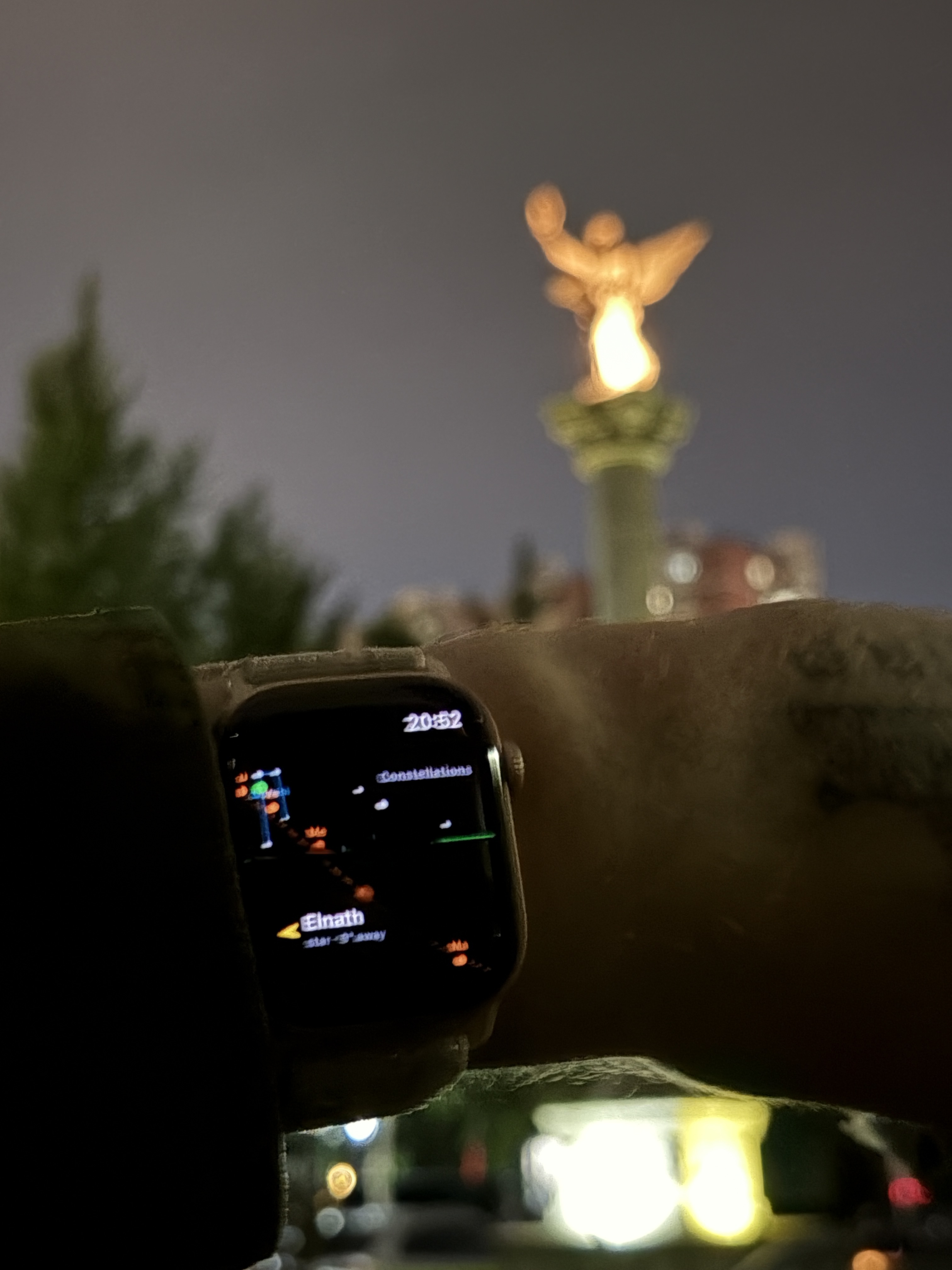
The astronomy is good to well under a degree. The watch's magnetometer is not, realistically maybe five to fifteen degrees of heading. That error dwarfs everything else, so I skipped the refinements that would hide underneath it: no precession of the star coordinates, no atmospheric refraction, no magnetic declination.
The thing that caught me out: the watch aims out of its back, not its screen. The first run outside read north as south, and tilting up dropped below the horizon. The fix was negating the altitude and adding 180 degrees to the azimuth.
A note this leaves me with. If I can make the small software I need for myself in an hour and cut out the fees, it gets hard to see why I would pay for software at all, other than frontier models or training my own. This might be the death of software as something you buy.
What holds its value seems to be different. Music, film, art, images, good well made work that exists outside any platform. And protocol. A protocol is a shared agreement rather than a product, and the cost of taking part in the network can be worth paying. Ethereum is the one I keep returning to. The software gets cheap. The made work and the shared agreements are what stay worth something.